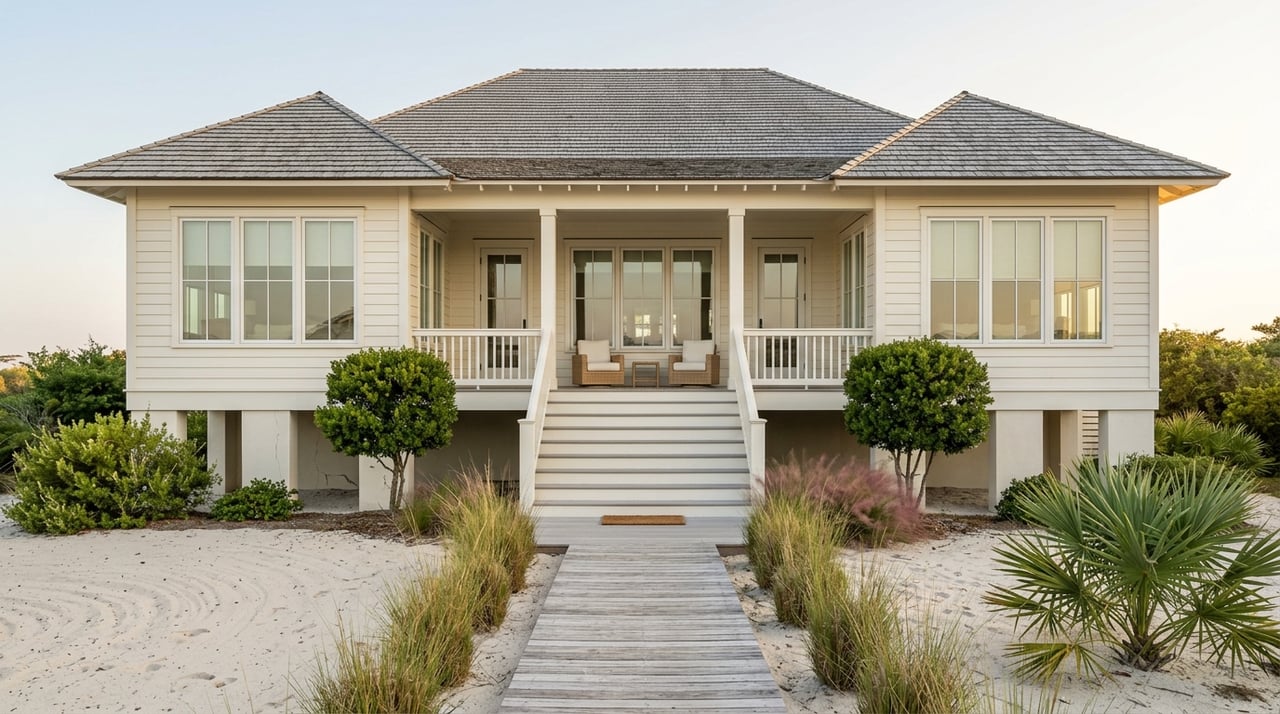
If you are thinking about buying a vacation rental near Harbor Island or St. Helena, the biggest mistake is assuming all coastal demand works the same way. It does not. In this part of Beaufort County, rental performance is shaped by beach access, seasonality, amenities, and the kind of experience your property delivers from day one. This guide will help you read rental demand more clearly so you can make a smarter purchase decision. Let’s dive in.
Why rental demand matters here
Harbor Island and St. Helena sit in a tourism corridor with meaningful visitor volume behind it. Beaufort County drew an estimated 3.74 million visitors in 2024, and tourism generated $4.09 billion in total economic impact while supporting 36,902 jobs. Even with a slight dip from 2023, visitation stayed well above pre-pandemic levels, which points to a mature leisure market rather than a short-term spike.
For you as a buyer, that matters because strong regional tourism can support vacation rental demand. It does not guarantee every property will perform the same, but it does create a wider pool of travelers looking for beach stays, nature-focused trips, and family getaways in this stretch of the Lowcountry.
Harbor Island demand at a glance
Harbor Island is a 1,400-acre barrier island about 15 miles outside Beaufort with three miles of beach. Official tourism materials describe it as a private, secluded beach destination with dunes, wildlife, and vacation rentals that serve couples, families, and larger groups. Guests are also drawn to pools, tennis, golf, biking, boating, and birdlife.
That tells you something important about demand on Harbor Island. Guests are not just booking a place to sleep. They are booking a beach-centered experience with easy access to activities, resort-style amenities, and a setting that feels calm and convenient.
Another major factor is proximity to Hunting Island. South Carolina Parks says Hunting Island is the state’s most visited state park, drawing more than a million visitors a year. With five miles of beach, marsh, maritime forest, and a historic lighthouse, it acts as a major nearby attraction that helps keep this corridor on travelers’ radar.
What Harbor Island guests usually want
Based on official destination positioning and live listing examples, Harbor Island demand tends to favor properties that make beach travel easy. That usually means:
- Close beach access
- Enough bedrooms and bathrooms for families or small groups
- Strong amenity access
- Easy parking and reliable internet
- A turnkey feel on arrival
Live listing examples also show how much guests respond to extras. Beach gear, golf carts, kayaks, fishing or crabbing access, and simple island circulation can all help a property feel more complete. If a home is near the beach but under-equipped, it may still book, but it is often competing from a weaker position.
Which Harbor Island properties fit demand best
Harbor Island reads more like a beach-resort market than a dense urban condo market. That means the inventory that best matches guest expectations is often:
- Oceanfront or near-beach homes
- Well-located condos with strong amenity access
- Properties sized for family trips or multi-generation stays
Smaller units can still work, but they often need a clear edge. That edge may be price, view, beach proximity, or a better amenity package. Size alone is not the only driver, but usability and convenience matter a lot.
St. Helena demand has a different feel
St. Helena Island attracts a broader and quieter type of traveler. Official tourism materials describe the area through its rural Lowcountry setting, agriculture, shrimping, fishing, coastal scenery, Gullah Geechee heritage, Penn Center, Fort Fremont, Lands End Beach, and locally owned food stops and farm stands.
That means demand on St. Helena is not driven by the same resort-style identity as Harbor Island. Instead, it can pull from several visitor types at once, including beach travelers, heritage-focused visitors, nature lovers, and people visiting family or friends in the area.
What the St. Helena numbers suggest
The public short-term rental snapshot for Saint Helena Island shows an active whole-home market. The reported figures include:
- 1,032 properties
- 50% occupancy
- $41.9K annual revenue
- $459.5 average daily rate
- $222.6 RevPAR
The supply mix is also telling. The snapshot shows 100% entire-home inventory, with 3-bedroom homes making up the largest share at 29%, followed by 4-bedroom homes at 22% and 5+ bedroom homes at 15%.
For you, that points to a market where whole-home usability matters. Guests appear to be booking homes, not just views or location alone. Bedroom count, layout, and how easily the property accommodates a short stay all matter in underwriting.
Amenities are expected, not optional
On St. Helena, the basics look like table stakes. Public data show very high rates of common amenities, including:
- Air conditioning: 100%
- Internet: 99%
- Kitchen: 98%
- Heating: 96%
- Parking: 93%
That means you should not treat these features as value-adds. In this market, guests already expect a functional, comfortable whole-home setup. If a property lacks one of these basics, it may stand out for the wrong reason.
How St. Helena compares to Beaufort overall
The broader Beaufort market snapshot shows lower averages at 53% occupancy, $215.8 ADR, and $26.7K annual revenue across 528 listings. While this is not a perfect apples-to-apples comparison, it suggests Saint Helena’s public snapshot reflects a more premium, whole-home market than Beaufort city overall.
For a buyer, that does not mean every St. Helena property will outperform. It does mean the market may reward the right type of home, especially one that aligns with the island’s quieter, more place-based appeal.
Seasonality shapes your underwriting
One of the clearest takeaways in this corridor is that demand is seasonal. NOAA climate normals for nearby Beaufort MCAS show average highs moving from the low 60s in winter into the upper 80s and low 90s in summer, then settling into the 70s during September and October.
In practical terms, the strongest booking windows are usually spring break, summer, and early fall. Winter can still produce shoulder demand, but you should generally expect lower rates and slower pacing. If you underwrite as though every month will behave like peak summer, you are setting yourself up for disappointment.
A practical way to think about seasonality
When you evaluate a property in Harbor Island or St. Helena, it helps to think in seasons rather than annual averages alone:
| Season | Likely demand pattern | What it means for buyers |
|---|---|---|
| Spring | Demand starts to build | Good test of location and appeal |
| Summer | Peak booking window | Strongest revenue opportunity |
| Early fall | Still active | Often extends the earning season |
| Winter | Slower shoulder period | Lower rates and more conservative assumptions |
This kind of framing can help you avoid overly optimistic projections. It can also help you compare two homes more realistically if one has stronger beach access, better amenities, or a layout that supports family travel.
What makes a property easier to rent
Across both Harbor Island and St. Helena, the most dependable pattern is simple: properties that feel easy, comfortable, and experience-driven tend to fit demand better. In this corridor, that often means:
- Beach or water proximity
- Enough bedrooms for families or small groups
- Reliable parking
- Strong internet service
- A home that feels ready on arrival
From there, the differences matter by location. On Harbor Island, resort amenities and beach access tend to carry more weight. On St. Helena, a home’s connection to the area’s quieter coastal setting may matter just as much as the structure itself.
What to check before you buy
Before you get too far into revenue projections, make sure the property can legally operate the way you intend. Beaufort County says short-term rentals in unincorporated areas require a Short-Term Rental Property permit and a business license. Owners or their designees must also meet safety and fire-inspection requirements, and permits must be renewed annually.
For self-managing owners, Beaufort County also says you need a South Carolina Department of Revenue accommodations retail license and must collect the 10% transient accommodations tax, which includes the 2% state accommodations tax, 5% sales tax, and 3% local accommodations tax.
Just as important, the county notes that short-term rentals are regulated by zoning district, and some uses may require special-use approval. So before you rely on projected income, check the parcel-level zoning and permit path. A rental model only works if the property is actually eligible for that use.
A smart buyer takeaway
If you are reading rental demand on Harbor Island and St. Helena, the clearest conclusion is that this corridor rewards the right product, not just any product. Harbor Island tends to perform best when a property delivers beach access, amenities, and a family-friendly vacation setup. St. Helena tends to favor whole homes that feel comfortable, functional, and aligned with a quieter Lowcountry experience.
The opportunity here is real, but so is the need for discipline. The best purchase decisions usually come from realistic seasonal assumptions, careful review of amenities and layout, and early confirmation of zoning and permit requirements.
If you want help comparing properties, pressure-testing rental potential, or navigating the Harbor Island and St. Helena market with local insight, the Mitchell Coastal Collective Team is here to help you make coastal living a reality.
FAQs
What drives vacation rental demand on Harbor Island?
- Harbor Island demand is driven by beach access, resort-style amenities, family travel appeal, and its proximity to major draws like Hunting Island State Park.
How is St. Helena Island rental demand different from Harbor Island?
- St. Helena has a broader, quieter demand profile shaped by whole-home stays, coastal scenery, heritage tourism, nature, and family visits rather than a pure beach-resort identity.
What property types fit Harbor Island rental demand best?
- The strongest fit is usually oceanfront or near-beach homes and well-located condos with enough bedrooms, bathrooms, and amenities to support family or group stays.
What amenities do St. Helena vacation rental guests expect?
- Public data suggest guests commonly expect basics like air conditioning, internet, a kitchen, heating, and parking as standard features in a whole-home rental.
What season is strongest for Harbor Island and St. Helena rentals?
- Spring, summer, and early fall are typically the strongest booking periods, while winter is usually a slower shoulder season with lower rates.
What should buyers verify before purchasing a short-term rental in Beaufort County?
- You should verify parcel-level zoning, short-term rental permit requirements, business licensing, safety and fire inspection rules, and applicable accommodations tax obligations before buying.