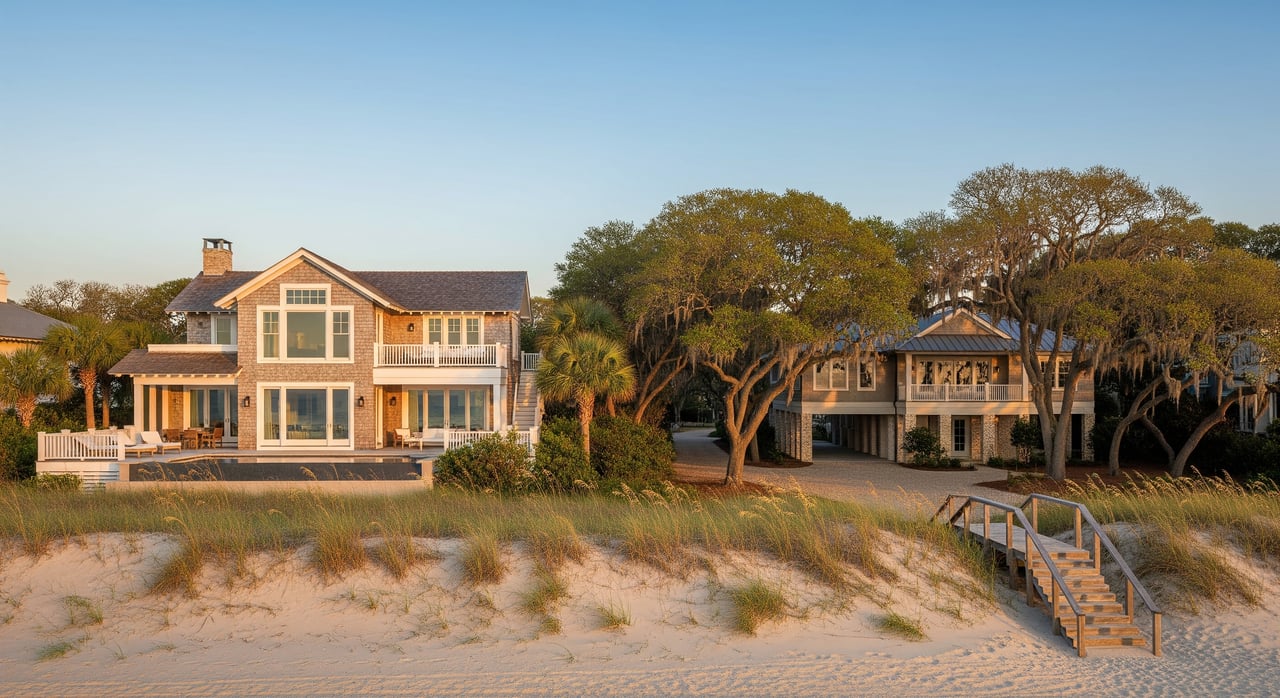
Are you torn between a true oceanfront home and a second-row retreat on Hilton Head Island? You are not alone. The decision touches lifestyle, rental potential, and long-term costs, and each option carries tradeoffs. In this guide, you will learn how views, beach access, rental demand, fees, and risk differ, plus a simple checklist to compare specific properties with confidence. Let’s dive in.
Quick take: oceanfront vs second-row
- Oceanfront delivers the strongest lifestyle appeal with full views and direct beach access, plus top headline rental rates and resale demand.
- Second-row often offers a lower entry price and similar occupancy when well located and managed, but views are partial or filtered and access can take a few more steps.
- Fees, insurance, and maintenance are typically higher for oceanfront, and risk exposure is greater due to surf and storm surge.
- Local context matters. Deeded access, parcel elevation, community rules, and setbacks can swing value more than the label alone.
Views and privacy
Oceanfront sightlines
Oceanfront homes typically offer unobstructed Atlantic views from main living areas and often multiple rooms. Orientation and elevation help maximize sightlines. Keep in mind that dune vegetation or nearby development can shift view quality over time.
Second-row view realities
Second-row views vary widely. Some homes capture partial ocean peeks through view corridors or from elevated decks, while others face marsh, fairways, or streets. Landscaping and allowable building heights in the community can affect view preservation.
What to verify on Hilton Head
- Confirm whether views are full, partial, or seasonal and if any covenants protect those view corridors.
- Ask about nearby parcels that are vacant or underbuilt and how future build-outs could impact views.
- Understand dune management in the area and how vegetation might change sightlines over time.
Beach access and deeded rights
Oceanfront convenience
Many oceanfront properties include direct, deeded access to the sand via private walkways or a community boardwalk. Immediate access is a major differentiator for daily living and guest experience.
Second-row access options
Second-row access can be deeded via an easement, shared through an HOA walkway, or through public access points. The time to reach the sand and whether you must cross a road shape day-to-day convenience and rental appeal.
What to confirm
- Is access deeded to the property, shared by an HOA easement, or public? Get the exact language.
- Who maintains the private walkover or boardwalk and how are replacement costs handled?
- How close is the nearest public access point and what are the rules there?
Rental demand and yield
Oceanfront performance
Oceanfront homes typically command the highest nightly rates and capture premium holiday and peak summer weeks. Full views and direct access drive strong guest demand.
Second-row performance
Second-row homes can deliver competitive occupancy and solid net income when priced well and near resort amenities or high-traffic areas. Amenity packages like a pool, parking, and pet policies, plus professional management and multi-channel distribution, can materially improve results.
Numbers to request before you buy
- Historical occupancy and average nightly rate for 2–3 years by comparable property.
- Gross income and net yield after management, utilities, upkeep, and taxes.
- Seasonal distribution by month and the mix of weekly vs weekend bookings.
Seasonality on Hilton Head
Expect a pronounced spring-to-summer high season. Fall often shows shoulder-season demand, and parts of winter can be quieter. Weather and events influence performance.
HOA, resort, and club fees
Oceanfront communities
Many oceanfront properties sit inside resort or gated communities such as Sea Pines or Palmetto Dunes, which may carry higher association fees. These can fund beachfront upkeep, walkover maintenance, dune restoration, and enhanced amenities. Some oceanfront condos may levy special assessments for structural, seawall, or dune work.
Second-row fee structures
Second-row homes can be in the same communities or in smaller associations with lower dues. Single-family neighborhoods may have modest monthly fees but still assess for shared items when needed.
Rental rules that matter
Access to clubs or resort facilities may require initiation fees or dues. If you plan to rent, review HOA rules for minimum stays, registration requirements, and rental windows. These rules can meaningfully affect income.
Insurance, maintenance, and risk
Flood zones and premiums
Oceanfront properties typically face higher wind and flood insurance premiums due to storm surge exposure and lower elevation. FEMA flood zone classification influences cost and lender requirements. Elevated construction and impact-rated features can help but may increase replacement cost.
Salt, dunes, and capital items
Expect more frequent exterior painting, corrosion management, HVAC and roof care, and dune or walkover repairs for oceanfront homes. Some areas fund beach nourishment or dune restoration through assessments or special districts.
Long-term resilience
Coastal erosion, sea-level rise, and storm intensity are real factors on Hilton Head. Review hazard mapping and local coastal management guidance for the specific parcel you are considering.
Local rules that shape value
- Coastal permitting and setbacks regulate what you can build near the beach and how walkways interact with dunes.
- FEMA flood maps and elevation certificates affect insurance and financing.
- Short-term rental registration, licensing, and tax remittance rules apply, and some communities add their own restrictions.
- Beach nourishment and dune projects can alter access and aesthetics and may create assessments.
- Verify whether properties are on central sewer or septic, since septic systems carry different maintenance needs and may affect rental suitability.
Neighborhood context on Hilton Head
Oceanfront and second-row choices come up often in Sea Pines, Palmetto Dunes, and the Singleton Beach area. Each setting blends beach proximity with a unique mix of amenities, building styles, and association rules. When comparing two homes, align neighborhood features and restrictions with your use plan and income goals.
Buyer due-diligence checklist
- Property and title: plat, legal description, survey, elevation certificate, and any beachfront or access easements with deed language.
- Association documents: bylaws, budgets, reserve studies, recent minutes, pending assessments, rental rules, and guest policies.
- Walkover details: ownership, maintenance responsibility, and replacement cost planning.
- Financials and rentals: 2–3 years of gross and net income, occupancy by month, comparable rate data, and a manager’s pro forma.
- Insurance and hazards: current flood and wind policies, premiums, claims history, flood zone designation, and any map revisions.
- Physical condition: inspection focused on coastal exposures, termite/pest inspection, age and condition of major systems, and cost estimates for beach-specific items.
- Public projects and zoning: planned beach work, seawalls, access or parking changes, and zoning that could affect views or access.
Frame your ROI decision
- Conservative case: assume lower occupancy and higher insurance and maintenance to estimate cash flow risk.
- Optimistic case: focus on peak-season performance, top-tier rates, and potential price appreciation.
- Lifestyle-weighted case: prioritize personal use, privacy, and direct access, and accept a lower short-term yield if the lifestyle return is the priority.
Final thoughts
There is no one-size-fits-all answer on Hilton Head. Oceanfront offers full views, direct access, and top headline rates, while second-row can deliver strong value and yield with a friendlier entry price. The right choice comes from parcel-specific facts, not labels. If you want a clear side-by-side on two homes, we can help gather comps, HOA documents, elevation data, and insurance quotes, and connect you with local managers and insurers.
Ready to compare oceanfront and second-row options with a local, concierge approach? Reach out to the Mitchell Coastal Collective Team to make coastal living a reality.
FAQs
How much more does oceanfront cost on Hilton Head?
- Premiums vary by neighborhood, unit type, and view quality. Ask for recent comps, price per front foot for single-family lots, and per-square-foot for condos within the same community.
Does second-row rent as well as oceanfront on Hilton Head?
- Oceanfront usually earns higher nightly rates, but well-located second-row homes can achieve strong occupancy and solid net income when priced and managed well.
What extra costs should I expect with an oceanfront home?
- Plan for higher wind and flood insurance, more frequent exterior maintenance, dune and walkover upkeep, and possible assessments for coastal protection or beach projects.
How can I protect an ocean view on Hilton Head?
- Check building height limits, community covenants, and any view or access easements. Still, adjacent owners may build within their rights, so verify future build-out potential.
Are short-term rentals allowed everywhere on Hilton Head?
- Local registration and licensing apply, and many HOAs or condos set their own rules like minimum stays and rental windows. Review current association documents and town requirements.
What should out-of-state buyers verify first?
- Start with comps, HOA bylaws and budgets, elevation certificate, flood zone, insurance quotes, and 2–3 years of rental history. Then schedule inspections focused on coastal exposures.