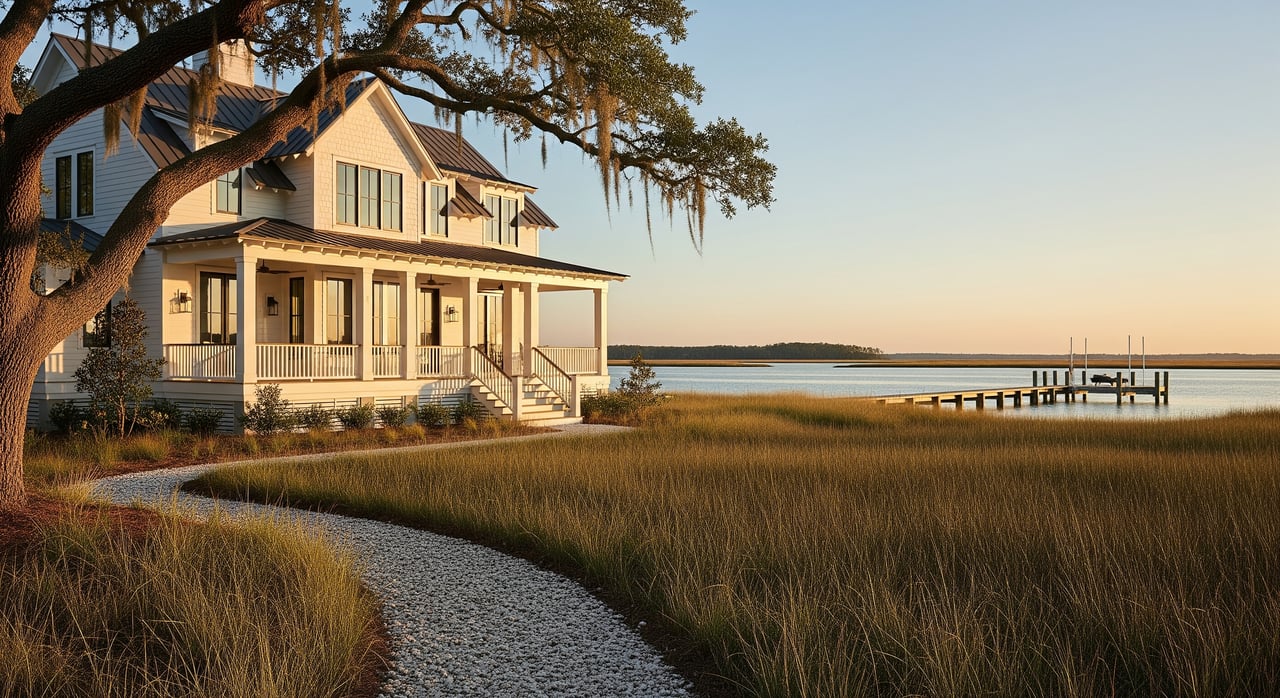
Should you buy a new build or a resale home in Bluffton? The sticker price rarely tells the whole story on the coast. Between flood zones, wind requirements, HOA dues, and builder upgrades, the true cost can shift fast. In this guide, you’ll see the real trade-offs, get a clear checklist, and learn where surprises tend to hide so you can choose with confidence. Let’s dive in.
Bluffton coastal factors that change costs
Bluffton sits in the Lowcountry with tidal creeks, marsh views, and areas of flood risk. Flood zone designations like A, AE, V, or X can influence how high a home must sit and what you will pay for flood insurance. Elevated construction can lower premiums, but it may add to build costs.
You are also in a coastal wind zone. Modern code requires wind-load features like roof tie-downs, strapping, and impact-rated openings in many cases. These protections can increase build cost but help reduce wind insurance exposure. Many new subdivisions include HOAs and amenities, which add monthly or quarterly fees that should be part of your budget from day one.
True cost comparison: new vs resale
Below are the major cost lines to compare. Focus on your time horizon, insurance quotes, HOA obligations, and how much customization you want.
Purchase price and lot premium
- New: The base price is only a starting point. Lot premiums for water, marsh, cul-de-sacs, and corner lots are common, and upgrades can push the final price higher.
- Resale: Price reflects condition, comps, and seller motivation. You may have more room to negotiate, especially if the home needs updates.
Upgrades and customization
- New: Options like flooring, kitchens, porches, elevated foundations, and impact windows can add up quickly. Builders may bundle incentives that offset a portion of these costs.
- Resale: You may secure concessions or repair credits, but most customization happens after closing and on your timeline.
Closing costs and incentives
- New: Builders often offer closing cost credits, rate buy-downs, or lender incentives. You still pay for title, appraisal, and lender fees.
- Resale: Standard buyer costs apply. Seller-paid concessions are possible depending on market conditions.
Financing differences
- New: If you build from scratch, you may need a construction-to-permanent loan with draw schedules and interest during construction. If you buy a completed spec home or model, standard conventional financing may apply.
- Resale: Conventional, FHA, or VA loans are common with shorter timelines and fewer draw-related steps.
Inspections and warranties
- New: Expect builder walk-throughs and punch lists. Many new homes include a builder warranty that covers workmanship, systems, and structure for different periods.
- Resale: Plan for full inspections, including general home and pest. Warranties are not automatic and are typically separate from the sale.
Property taxes and assessments
- New: Assessments often reset based on the sale price. Some new communities include special assessments for infrastructure or amenities.
- Resale: You can review prior tax history, but reassessment at sale can change future bills.
Insurance costs
- New: Elevated, code-compliant builds may reduce wind and flood insurance costs, but coastal risk still drives premiums. Get quotes early, especially if in A, AE, or V zones.
- Resale: Older homes may not have modern wind mitigation or sufficient elevation, which can increase premiums. Request flood zone details and an elevation certificate if available.
Utility and impact fees
- New: Connection, meter installation, and impact fees may be passed through at closing. Some builders include these in pricing, while others do not.
- Resale: Utilities are usually in place, so you avoid most big upfront utility fees.
Maintenance and near-term repairs
- New: Systems and appliances are new, so maintenance is low early on. Warranty coverage helps with small issues.
- Resale: Review roof, HVAC, water heater, and major system ages. Budget for near-term replacements if they are nearing the end of their lifecycle.
Energy and operations
- New: Modern insulation, windows, and HVAC typically cut utility costs and improve comfort.
- Resale: Efficiency varies. Upgrades can help but may require a larger upfront investment.
Time and carrying costs
- New: Building can take months. You may carry your current housing costs or pay for temporary housing during that period.
- Resale: Faster closings are common, often in 30 to 45 days, which reduces uncertainty and carrying costs.
Resale value and appreciation
- New: Fresh layouts and features can hold a premium, but values in new communities may level as more homes are delivered. Lot and location drive long-term value.
- Resale: Established neighborhoods can benefit from maturity and location. Deferred maintenance can hold values back until addressed.
Financing, contracts, and timing
Construction loans 101
Construction-to-perm loans typically require higher down payments, draw inspections, and interest paid during construction. Builder deposits can be nonrefundable, and change orders may create overruns. Get pre-approval early and understand your lender’s draw schedule and inspection process.
Builder vs resale contracts
Builder contracts often favor the seller. Pay close attention to price escalation clauses, change order rules, completion timelines, and remedies if delays occur. With resale contracts, you can negotiate inspection contingencies, repairs, and closing cost splits using standard forms.
Permits and potential delays
Coastal weather and supply chains can affect timelines. Permits and inspections add steps that may extend completion, especially during hurricane season. Resale homes avoid most of these variables and can close faster.
Title, easements, and HOA review
In new subdivisions, developers may retain easements and control of common areas. Review the plat, CC&Rs, budget, and rules before you sign. In resale communities, evaluate HOA health, any planned capital projects, and the risk of special assessments.
Risk transfer and warranties
Know what a builder warranty covers and for how long. Manufacturer warranties may be separate. In resale, your inspection and negotiated repairs are your main risk controls.
Long-term ownership in Bluffton
HOA fees and amenities
Many new Bluffton communities have pools, trails, and clubhouses that require HOA dues. These dues impact your monthly cost and should be weighed against the amenities you plan to use. In resale communities, verify current fees and whether increases are planned.
Flood and storm costs
Flood insurance premiums depend on zone and elevation. Elevation certificates can materially reduce rates by proving the home sits above base flood elevation. Windstorm policies often have percentage deductibles in coastal South Carolina, so confirm how that affects your budget.
Maintenance and lifecycle planning
New homes defer major replacements for years, but roofs, HVAC, and exterior finishes still age. Resale buyers should plan a 5 to 10 year maintenance budget based on inspection findings and system ages.
Energy savings and payback
New builds may include efficient HVAC, tight envelopes, and quality windows that lower monthly costs. In resale homes, energy improvements can help, but weigh the upfront expense against how long you plan to hold the property.
Marketability when you sell
Modern layouts and storage appeal to a wide buyer pool. Established neighborhoods can offer setting and curb appeal that also attract buyers. Your lot, elevation, and how well you maintain the home are long-term value drivers in both cases.
Your decision checklist
Use this short framework to compare homes on a level field.
- Time horizon: If you expect a shorter hold, a resale may avoid construction timelines. Longer holds can favor new builds with lower early maintenance.
- Insurance quotes: Obtain homeowner’s, wind, and flood quotes for each address or lot. This can be a decisive cost difference.
- Flood risk: Confirm flood zone and, if applicable, get an elevation certificate. Ask how elevation compares to base flood elevation.
- HOA budget: Review CC&Rs, current budget, and reserves. Check for planned fee increases or special assessments.
- Cash and financing: Construction loans may need larger down payments and contingency funds for overruns. Conventional loans on resale are more straightforward.
- Customization value: Decide how much you value personalization and which upgrades will matter to future Bluffton buyers.
- Maintenance profile: Compare near-term repair needs on resale versus warranty coverage on new.
What to do next
- Get lender guidance: If building, ask about construction-to-perm loan options, draw schedules, and rate locks. If buying resale, secure full pre-approval.
- Price the lot: Verify any lot premium, especially for marsh or water views, corners, and cul-de-sacs.
- Request detailed lists: For new builds, ask for an itemized upgrade sheet and what is included in the base price. For resale, request recent utility bills and maintenance records.
- Check flood and wind: Confirm flood zone and elevation details, then get wind and flood quotes early.
- Review HOA documents: Read CC&Rs, bylaws, budget, reserves, and any pending projects or assessments.
- Plan inspections: Schedule independent inspections for both new and resale. For new, consider pre-drywall and final inspections.
When you are ready to compare specific homes, a local, hands-on guide makes all the difference. If you want tailored numbers, vendor referrals, and a clean process from first look to closing, reach out to the Mitchell Coastal Collective Team. We help you weigh the true costs and make coastal living a reality.
FAQs
Is new construction always more expensive than a resale in Bluffton?
- Not always. Base prices can be competitive, but upgrades, lot premiums, and connection fees may raise the total, while resale homes can require immediate repairs that add cost.
How much contingency should I budget when building in Bluffton?
- Many buyers set aside a contingency around 5 to 10 percent for change orders, elevation or mitigation needs, and carry costs during construction, subject to lender and builder guidance.
Will a new build lower my insurance and utility bills enough to offset the premium?
- It can help due to modern codes and energy efficiency, but savings vary by flood zone, elevation, and local wind rates, so request quotes to quantify the difference.
Should I hire an independent inspector for a new home in Bluffton?
- Yes. Pre-drywall and final inspections help catch issues early and give you documentation for the punch list and warranty process.
Why does flood zone and elevation matter for Bluffton homes?
- Flood zone and elevation drive both required building elevation and flood insurance premiums, and an elevation certificate can reduce costs if the home sits above base flood elevation.
How do HOAs affect the true cost in Bluffton communities?
- HOA dues, capital contributions, and special assessments add to long-term costs and should be reviewed in the community’s CC&Rs, budgets, and reserve studies before you buy.