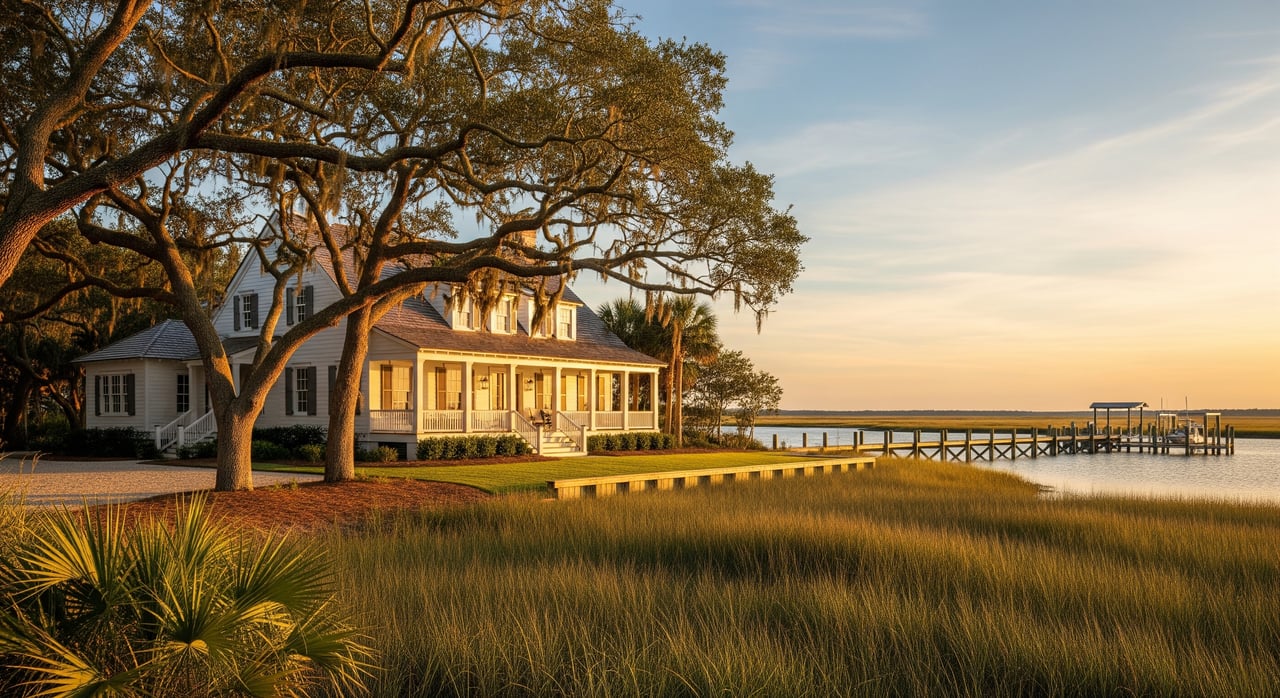
Torn between sunrise on the May River and the predictability of an inland neighborhood? You are not alone. Many Bluffton buyers love the Lowcountry’s water lifestyle but want clarity on the true costs, maintenance, and long-term risks. This guide breaks down the money, time, and lifestyle tradeoffs so you can choose with confidence. Let’s dive in.
Purchase price: what drives premiums
Waterfront and marshfront homes in Bluffton typically sell at a premium compared to similar inland options. The size of that premium depends on your specific slice of water and the neighborhood around it. Deep-water access, a dock or lift, and long panoramic views usually command the highest prices. Marsh-view or tidal creek properties without deep-water access often sit in the middle. Inland homes in planned communities can offer more space, newer construction, and lower exposure to coastal risks at the same price point.
Your best comparison is like-for-like. Look at recent sales of similar square footage, lot size, condition, and age within the same or nearby neighborhoods. You can review sale histories by parcel on the Beaufort County property search and pair that with current MLS data from your agent to understand premiums in your target micro-markets.
Beyond asking price, consider liquidity. Waterfront homes often attract a narrower but more motivated buyer pool that prizes access and views. When insurance markets tighten or storms dominate headlines, waterfront days-on-market can stretch. Inland homes tend to appeal to a broader pool of buyers looking for lower maintenance and predictable costs.
Recurring costs to budget
Owning on the water changes your monthly and annual budget. Plan for the categories below and request documents early in your search.
Flood insurance
If the home is in a high-risk FEMA flood zone and you finance the purchase, your lender will require flood insurance. Policies are available through the National Flood Insurance Program and private carriers. Premiums vary by flood zone, elevation, construction details, and claims history. Ask for the Elevation Certificate and any flood-loss history. Review the parcel’s zone on the FEMA Flood Map Service Center and learn how coverage works through NFIP flood insurance.
Homeowners and wind coverage
Coastal wind and hail exposure can increase premiums or require separate windstorm deductibles. Carriers may also offer discounts for impact-rated windows, roof tie-downs, and other wind-mitigation features. Compare quotes from multiple insurers and confirm any special deductibles for named storms. The South Carolina Department of Insurance provides consumer guidance on market conditions and coverage basics.
Property taxes
Assessed value drives taxes, and higher-value waterfront property can translate to higher bills. Pull prior assessments and confirm the current classification for owner-occupied versus non-owner-occupied status. You can review assessment details and millage information through the Beaufort County tax assessor.
HOA and amenity fees
Many waterfront neighborhoods and inland master-planned communities have HOAs. Fees can cover common-area upkeep, amenity access, and sometimes seawall or dock maintenance. Ask for covenants, budgets, recent meeting minutes, and any reserve studies. If a property is not in an HOA, look for private maintenance agreements or easements that share costs for shoreline structures or drive access.
Utilities: sewer vs septic
Parts of Bluffton are served by the Beaufort-Jasper Water & Sewer Authority, while other areas still use septic systems. Public sewer can offer convenience and predictability. Septic systems require periodic pumping and eventual replacement, which you should factor into long-term costs. Confirm utility connections and any planned upgrades with the Beaufort-Jasper Water & Sewer Authority.
Maintenance and capital needs
Waterfront ownership is as much about stewardship as it is about views. Budget time and money for proactive upkeep.
- Shoreline protection. Seawalls, bulkheads, or riprap have finite lifespans. Repairs and replacements require planning, permits, and meaningful capital. Request recent inspection reports and confirm permits are current and transferrable.
- Docks and lifts. Pilings, decking, and mechanicals need routine inspections and periodic replacement. Liability and insurance considerations also apply.
- Salt air and corrosion. Expect more frequent painting, exterior hardware replacement, and HVAC service. Marine-grade materials often pay off over time.
- Moisture and pests. Humidity, tidal events, and marsh habitat can increase mold and termite pressure. Dehumidification, gutter and drainage management, and regular pest control are wise investments.
- Storm hardening. Many coastal owners choose impact windows, shutters, elevated utilities, or standby generators. Upfront costs can reduce risk and may support improved insurance terms.
- Yard and erosion. Marsh-edge properties may require native buffer plantings and erosion control. Verify local rules before altering the shoreline or vegetation.
Inland homes usually see a lighter maintenance load. Newer construction with cementitious siding, standard roofing, and public utilities can reduce surprises and make future costs more predictable.
Flood risk and rules
Flood risk is property-specific. Two similar-looking homes can have very different zones, base flood elevations, and insurance costs. Always verify with documents.
- FEMA maps and elevation. Check the parcel’s flood zone and panel on the FEMA Flood Map Service Center. An Elevation Certificate helps determine risk and potential premiums.
- Future exposure. Tidal flooding and sea-level rise are important planning factors in the Lowcountry. Review local scenarios on the NOAA Sea Level Rise Viewer and consider how elevation and construction type influence resilience over time.
- Local building standards. Bluffton and Beaufort County have floodplain ordinances with elevation and freeboard requirements for new builds and substantial improvements. Confirm specifics with Town of Bluffton Planning & Zoning and Beaufort County planning pages.
- Permits for shoreline work. Seawalls, bulkheads, and docks usually require approvals from state and federal agencies, and sometimes the county or town. Ask for permit records before you buy and plan lead time for any changes.
Lifestyle tradeoffs you will feel
Waterfront life delivers daily moments that are hard to price: dolphin sightings, golden-hour marsh light, and the ease of dropping a line off your dock. Privacy can be excellent on larger lots, and boating or kayaking tends to become part of your routine. That said, you may notice more insects in some seasons, higher humidity around the marsh, and occasional noise from boat traffic or nearby access points.
Inland living shines for convenience. You may be closer to retail, services, and schools depending on the neighborhood. Maintenance is often simpler, and you can allocate more of your budget to finishes, outdoor living, or a larger lot rather than shoreline infrastructure. The tradeoff is clear: you do not get water in your backyard, and view-based appreciation can be less dramatic in markets where waterfront is prized.
Resale and liquidity
Waterfront values often hinge on access quality and the durability of shoreline improvements. When docks are deep-water, well maintained, and properly permitted, the premium tends to be more durable. Insurance costs and flood-risk perception can influence buyer demand, which may affect days-on-market.
Inland homes usually draw a wider audience, including first-time move-up buyers and retirees who want predictable costs. That broader pool can support steady liquidity, particularly in neighborhoods with strong amenities, maintained infrastructure, and convenient access to daily needs.
Short-term rentals: know the rules
If you are evaluating potential rental income, confirm regulations early. The Town of Bluffton and Beaufort County regulate short-term rentals through permitting, registration, and zoning rules. Check allowable areas, occupancy limits, tax requirements, and HOA restrictions before underwriting any revenue assumptions. Start with Town of Bluffton Planning & Zoning and verify any county-level requirements as well.
What to request before you offer
Gather documents that make flood risk, maintenance, and ownership costs transparent. Your agent can help you assemble these quickly.
- Elevation Certificate and FEMA flood map panel for the parcel
- Flood insurance declarations and loss history, if available
- Seawall and dock permits, engineering reports, and any recent inspection records
- HOA covenants, budgets, reserve studies, and recent meeting minutes
- Utility connection status with BJWSA vs septic, plus any planned sewer extensions
- Recent inspection reports for roof, structure, and pest, and any storm damage history
- Property survey showing boundaries, wetlands, and easements
- Assessment details and millage info from the county tax assessor
Quick decision guide
If you prioritize the water lifestyle and are comfortable managing variable costs, a waterfront or marshfront property can be a rewarding long-term choice. Focus on elevation, permitting, and the condition of shoreline structures to protect your investment.
If you value predictability and lower maintenance, inland communities offer excellent options. You may secure a newer home, larger lot, or more amenities for the same budget while keeping recurring costs easier to forecast.
Ready to weigh specific homes in Bluffton side by side? Partner with a local team that knows the nuances of flood zones, permits, and HOA budgets. The Mitchell Coastal Collective Team offers hands-on guidance, vetted vendor referrals, and clear, data-driven comparisons to help you choose with confidence.
FAQs
How much more does waterfront cost in Bluffton?
- Premiums vary by water type, dockability, elevation, and neighborhood; compare recent like-for-like sales using county records and MLS comps to gauge the true gap for your target area.
Will I need flood insurance for a Bluffton home?
- If the home is in a high-risk FEMA zone and you use a mortgage, lenders will require it; even outside high-risk zones, review the FEMA map and Elevation Certificate to make an informed decision.
What maintenance should I expect for seawalls and docks?
- Plan for routine inspections, periodic repairs, and eventual replacement; request permits and engineering reports to understand age, condition, and likely timelines.
Can I insure a waterfront property in South Carolina?
- Yes, but premiums and deductibles vary; compare multiple carriers and ask about wind-mitigation discounts, and review guidance from the state insurance department.
What permits are required for shoreline work in Bluffton?
- Significant shoreline projects typically need approvals from state and federal agencies and may involve county or town reviews; verify existing permits and consult local planning offices before altering structures.
Are inland homes better long-term investments than waterfront?
- Inland homes can offer broader buyer appeal and steadier liquidity, while waterfront can command durable premiums when access and shoreline structures are strong; weigh risk, maintenance, and lifestyle priorities.
How do I check if a property is on sewer or septic?
- Confirm service status and any planned extensions with the local utility; in Bluffton, start with the Beaufort-Jasper Water & Sewer Authority for connection maps and guidance.